
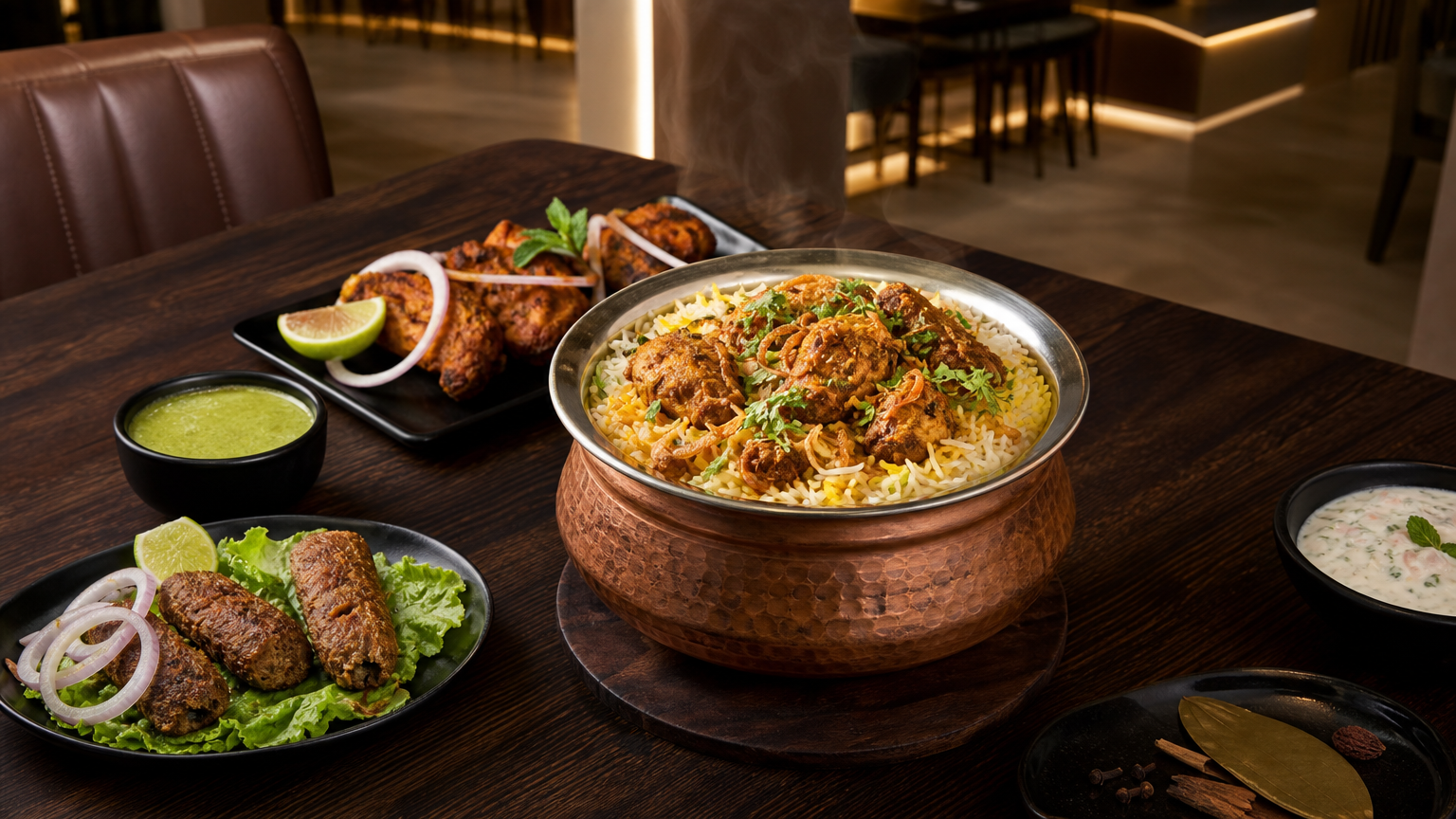
If you've walked into an Indian or Arabian restaurant and spotted "biryani," "pulav," and "mandi" on the menu, you've probably wondered: what's the difference? To the untrained eye, they all look like fragrant rice cooked with meat or vegetables. But the cooking method, flavor profile, regional origin, and final taste of each dish are distinctly different.
At Biryaniify, we specialize in all three traditions—Hyderabadi dum biryani, Andhra pulav, and Arabian mandi—each cooked the authentic way. This guide breaks down the differences so you can order with confidence and understand why each one tastes the way it does.
What Is Dum Biryani? The Sealed, Slow-Cook Method
Dum biryani comes from the word "dum," which means "to breathe" or "to steam" in Urdu. It's a cooking technique where:
- Raw basmati rice and marinated meat are layered in a handi (a round cooking pot) with whole spices, mint, fried onions, and saffron.
- The pot is sealed with a tight lid (sometimes the lid is sealed with dough to trap all steam inside).
- Slow-steamed over low heat for 45 minutes to over an hour. The trapped steam cooks both the meat and rice together, and every grain absorbs the meat's juices and aromatics.
- No stirring. The beauty of dum is that the pot stays sealed—no peeking, no stirring. The magic happens inside.
Flavor profile: Hyderabadi dum biryani is aromatic, complex, and deeply flavorful. The slow cook allows spices to infuse every grain, and the meat becomes incredibly tender. Saffron, mint, and fried onions create a signature sweet-savory balance. Try our Hyderabadi Chicken Dum Biryani or Hyderabadi Mutton Biryani to taste the difference.
Origin: Dum biryani is most associated with Hyderabad, India, though versions exist across South Asia—Lucknowi biryani (Uttar Pradesh), Kolkata biryani (West Bengal), and even Sindhi biryani. Each region has its own spice balance and layering technique.
What Is Pulav? The Open-Pot, Stir-and-Cook Method
Pulav (also spelled "pilaf" or "pilau") is a rice dish where:
- Rice is cooked in an open pot (no tight seal) with meat, vegetables, and spices.
- The cook stirs occasionally to ensure even cooking and prevent sticking.
- Faster cooking time: Usually 30–40 minutes because the pot isn't sealed and heat escapes.
- Less intense infusion. While the rice absorbs flavor, it doesn't develop the same depth as dum biryani because the steam and aromatics aren't fully trapped.
Flavor profile: Pulav is lighter and more delicate than biryani. It's fragrant and flavorful but less intensely spiced. The rice grains remain separate and fluffy. It's a great choice if you want the taste of Indian rice dishes without the heavier, more complex flavor of biryani.
Origin: Pulav is especially popular in Andhra Pradesh, and versions exist across North India. Biryaniify's Andhra Pulavs feature veg kheema, chicken pulav, and mutton pulav—each a study in balancing texture and spice.
What Is Mandi? The Grilled Meat & Rice Assembly
Mandi is an Arabian/Levantine dish where:
- Meat is marinated and grilled (often on a vertical spit or al faham grill) until charred and smoky.
- Rice is cooked separately in a pot, often enriched with the meat's drippings or a rich broth.
- Assembled to order: Grilled meat is placed on top of rice (or layered together), creating a smoky, charred exterior with tender interior.
- Fastest option. Since the meat is pre-grilled, mandi comes together in 15–20 minutes.
Flavor profile: Mandi is bold and smoky. The grilling adds a charred, smoky crust to the meat, and the rice is fragrant and absorbs some of that smoke. It's less about spice complexity and more about the interaction of smoke, char, and tenderness. Often served with a garlic and lemon sauce on the side.
Origin: Mandi hails from Yemen and is a staple across the Levantine region (Lebanon, Syria, Jordan, Palestine). It's become increasingly popular across the Arabian Peninsula and now in diaspora communities worldwide. Biryaniify's Al Faham Chicken Mandi brings this Levantine tradition to Irving.
Dum Biryani vs. Pulav vs. Mandi: Quick Comparison
| Aspect | Dum Biryani | Pulav | Mandi |
|---|---|---|---|
| Cooking Method | Sealed, slow-steamed | Open pot, stirred | Grilled + rice assembly |
| Cook Time | 45 min–1+ hour | 30–40 min | 15–20 min |
| Flavor | Deep, complex, aromatic | Fragrant, lighter, delicate | Smoky, charred, bold |
| Spice Profile | Whole spices, saffron, mint | Mild to moderate | Aromatic, not primarily spiced |
| Origin | Hyderabad, South Asia | Andhra Pradesh, North India | Yemen, Levantine region |
| Best For | Celebration, special occasions | Weeknight dinner | Quick, flavorful lunch |
Why You Should Try All Three at Biryaniify
Biryaniify is one of the few Indian restaurants in Irving that offers authentic versions of all three traditions. Here's why each is worth ordering:
Dum Biryani for Complex, Layered Flavor
If you want the "wow" moment—the deep, aromatic, complexity that keeps you coming back—order biryani. It takes longer and requires more technique, which is exactly why it tastes so good.
Pulav for Lighter, Faster Satisfaction
If you want authentic Indian rice without the heavier spice load or the wait time, pulav is your answer. It's elegant and flavorful without being overwhelming.
Mandi for Smoke-Grilled Drama
If you love smoky, charred, grilled flavors, mandi hits a completely different note. It's Arabian, it's bold, and it's a welcome break from the Indian spice palette.
Can You Make Them Vegetarian?
Yes! All three dishes work beautifully as vegetarian options. Biryani can feature paneer, potato, mushroom, or chickpea. Pulav adapts easily with mixed vegetables or paneer. And while mandi is traditionally meat-centric, grilled paneer or seasonal vegetables can create a hearty vegetarian version. Explore Biryaniify's vegetarian biryani, pulav, and rice bowls to see what's available.
Frequently Asked Questions
What is dum biryani and why is it different from pulav?
Dum biryani seals the meat, rice, and spices in a handi (cooking pot) under a tight lid and slow-steams them together from start to finish. Pulav cooks rice and meat together in an open pot, stirring occasionally, so it's faster and less sealed. Biryani develops deeper, more complex flavors because the steam is trapped and every grain absorbs the meat's juices and spices.
Is mandi the same as biryani?
No. Mandi is an Arabian/Levantine dish where grilled meat (often marinated and spit-roasted) is served over fragrant rice cooked in the meat's drippings. It's less of a layered cook and more of an assembly—grilled protein on top of rice. Biryani is fully integrated, with meat and rice slow-cooked together from the start.
Which is spicier: biryani or pulav?
Spice level depends on the recipe, not the cooking method. Traditional Hyderabadi dum biryani tends to have more complex whole spices (saffron, mint, fried onion), while pulav can range from mild to spiced depending on the chef. Mandi is typically aromatic rather than fiery—more fragrant than hot.
How long does it take to cook dum biryani?
True dum biryani takes 45 minutes to over an hour—the meat is marinated, layered with raw rice and spices, sealed, and slow-cooked. Pulav is faster, usually 30–40 minutes. Mandi is quickest since the meat is pre-grilled; it's mainly about cooking the rice and assembling.
Can I make vegetarian biryani or pulav?
Absolutely. Both biryani and pulav work beautifully as veg dishes using paneer, potatoes, peas, and mushrooms in place of meat. The cooking method stays the same—dum for biryani, open-pot for pulav. Mandi, traditionally meat-centric, can also be adapted with grilled vegetables or paneer.
What region is biryani from, and what about pulav and mandi?
Dum biryani is most associated with Hyderabad, India, though versions exist across North and South India (Lucknowi, Kolkati). Pulav is popular in Andhra Pradesh and across North India. Mandi originates from Yemen and the Levantine region (Lebanon, Syria, Jordan) and is a staple in Arabian cuisine. Biryaniify serves all three traditions in one kitchen.
Ready to taste all three?
Browse the menu and order your Hyderabadi biryani, Andhra pulav, or Arabian mandi today.